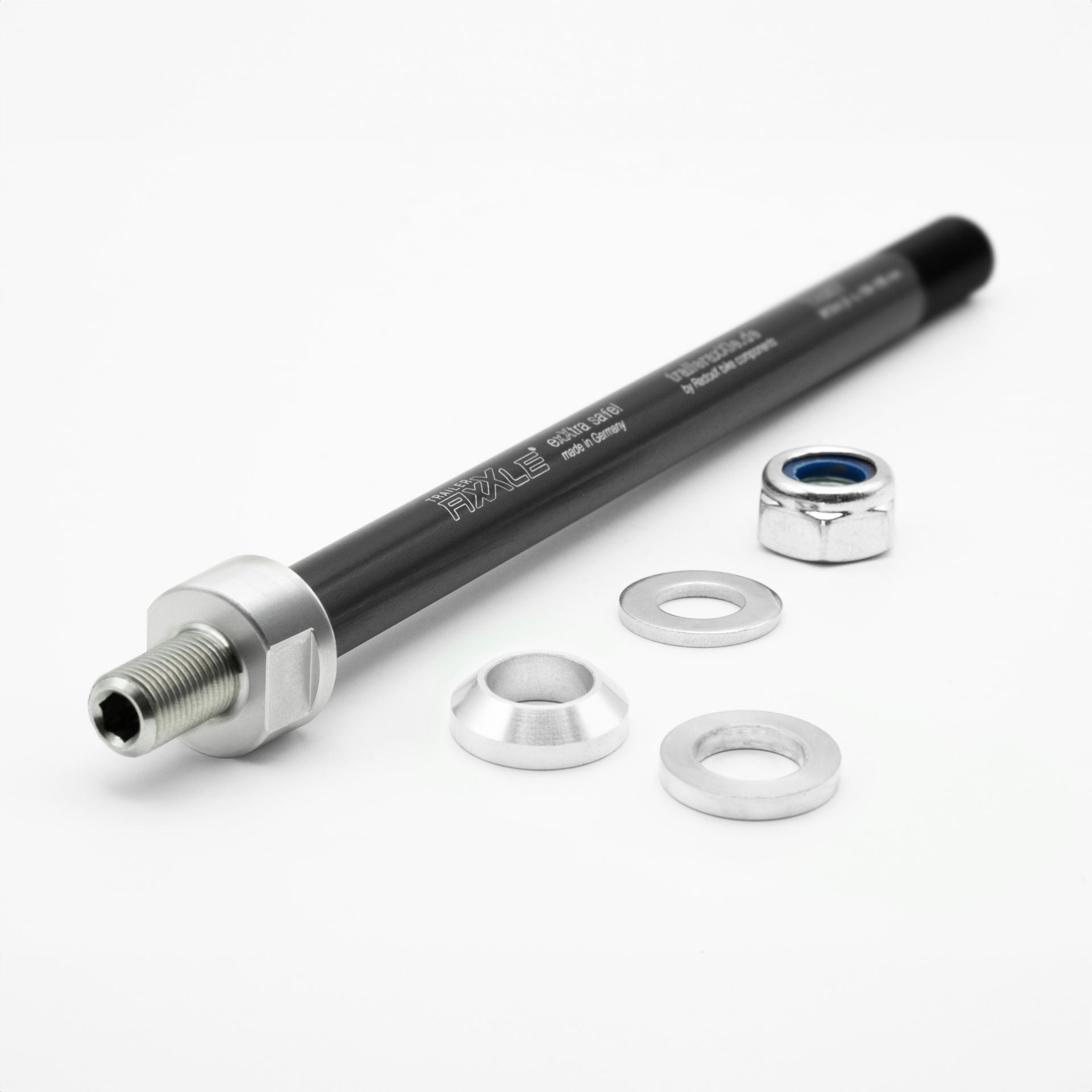
The veolo trailer can be attached to the rear wheel of almost all bicycles. We explain in 5 steps how to properly install the bike trailer hitch and which accessories you need depending on the axle type.
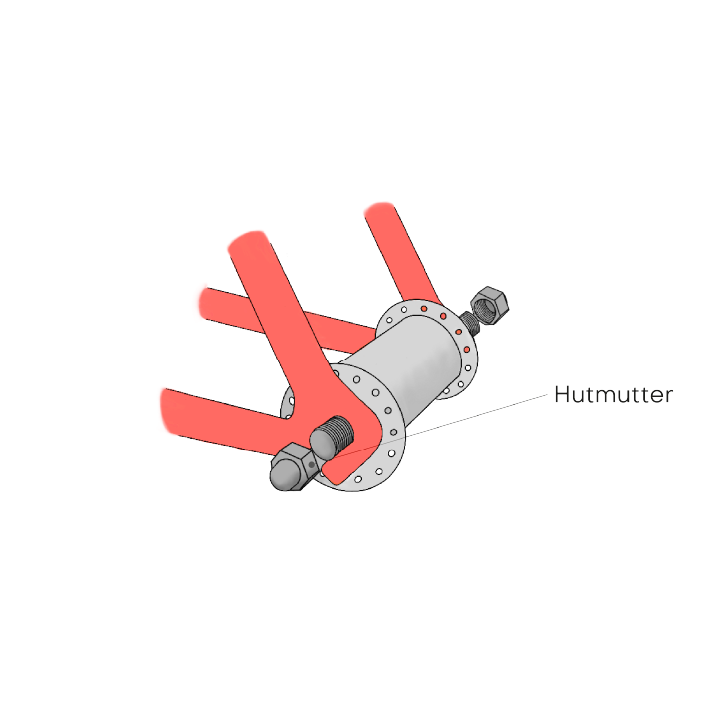
Solid axle: firmly connected to the hub on the left and right by locknuts. Older bicycles often have solid axles.
Quick-release axle?
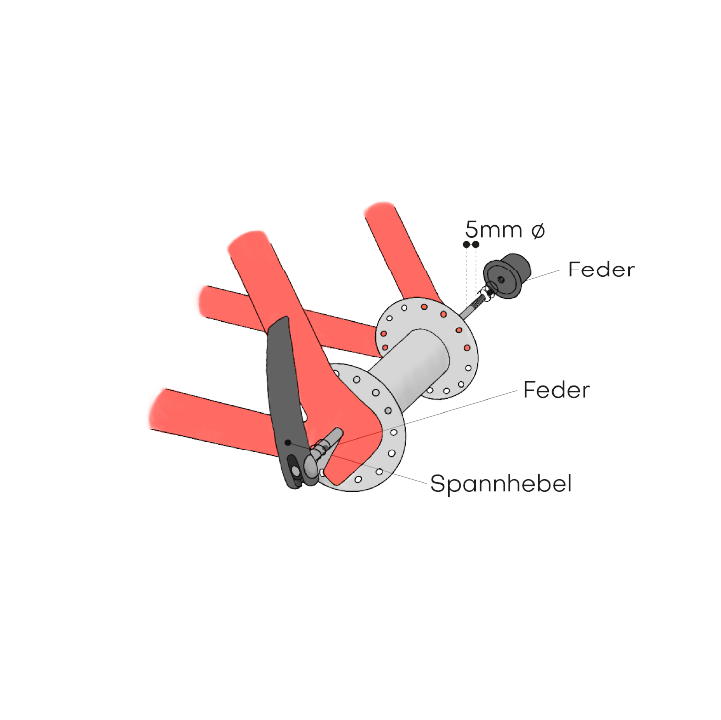
Quick-release axle: Clamping lever with approximately 5 mm diameter and springs on the left and right.
Steering axle?
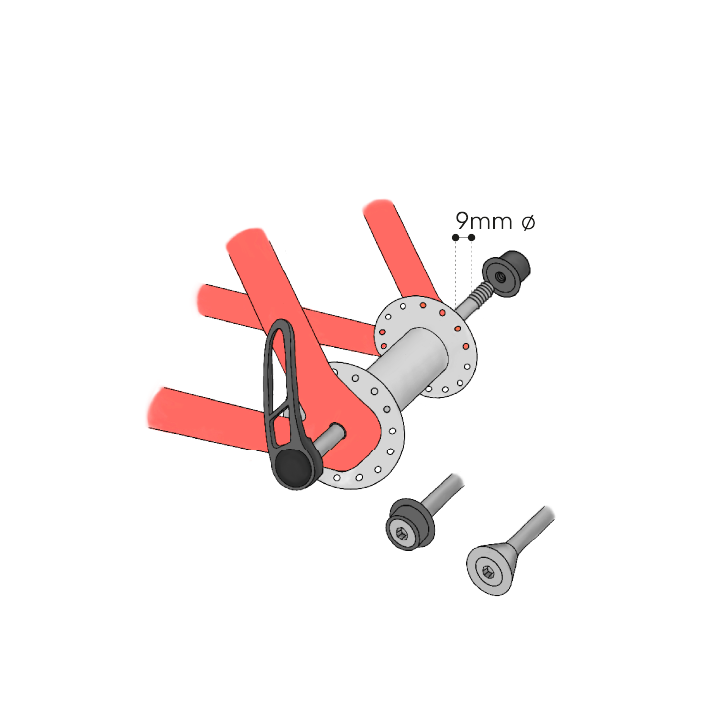
Thru-axle: may also have a quick-release lever, but it is over 9 mm thick and has visible threading on one side.
Do you have a thru-axle? Then jump directly to step 3.
2. Check the frame
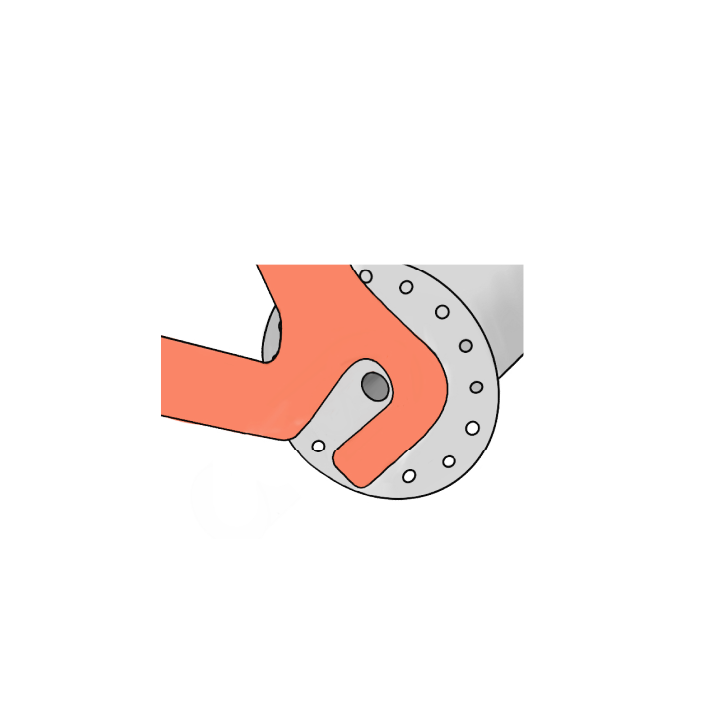
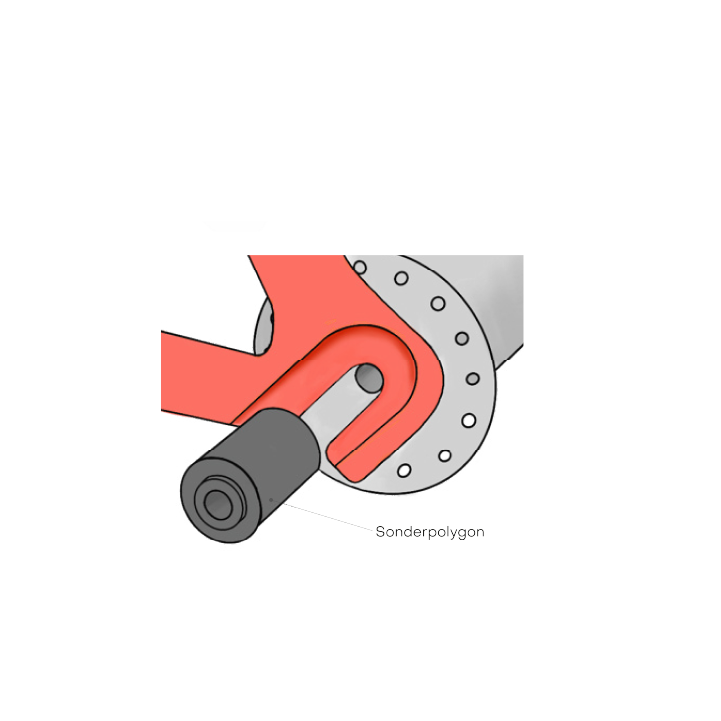
Only for quick-release or solid axles: check if your frame is flat dropout on the left side in the direction of travel or recessed dropout:
Outrageously Flat
If the frame has no recess, it is completely flat, see illustration. Proceed to step 3.
Outrageously Deep
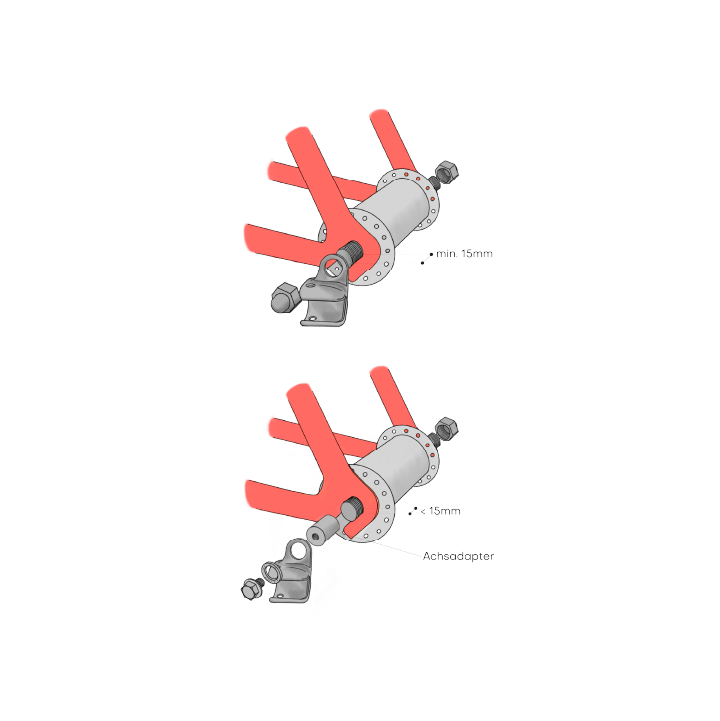
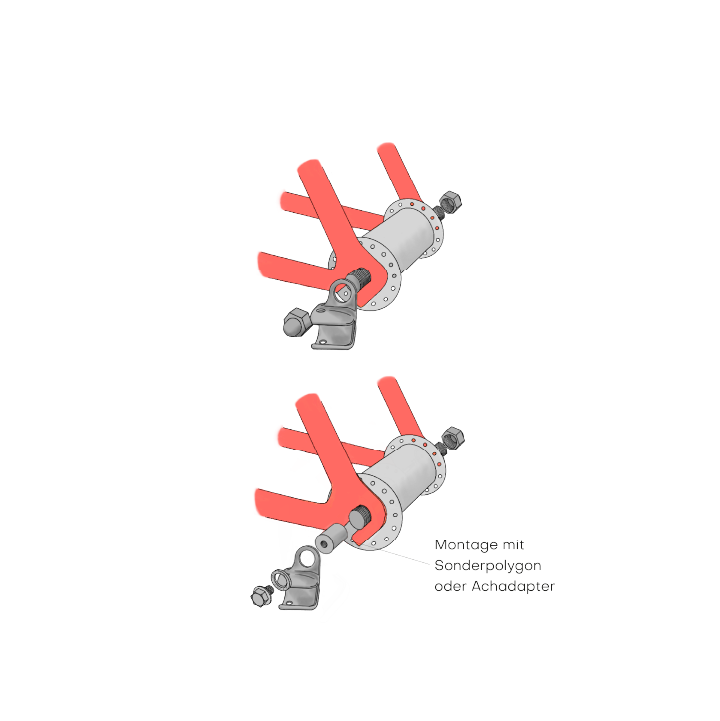
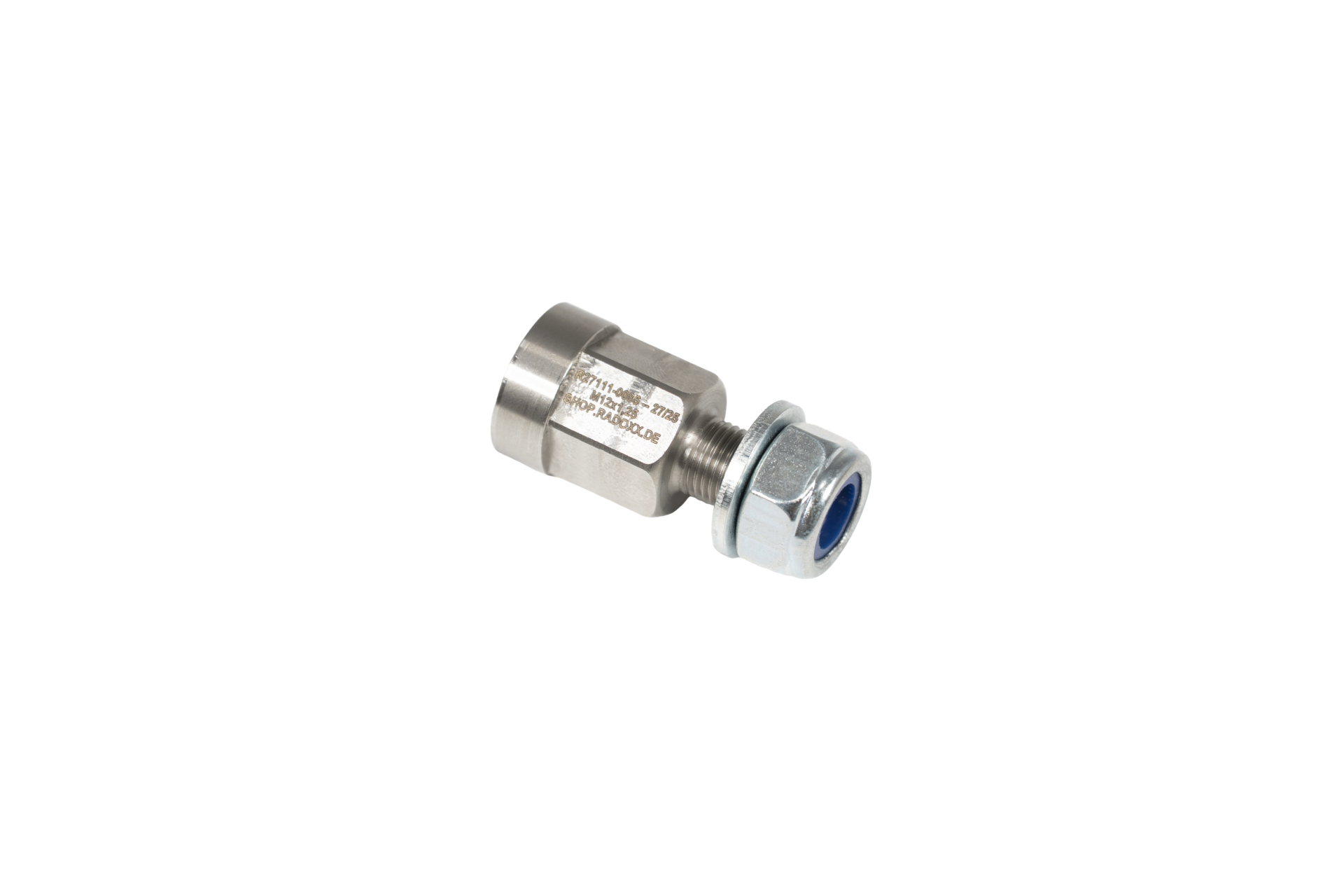
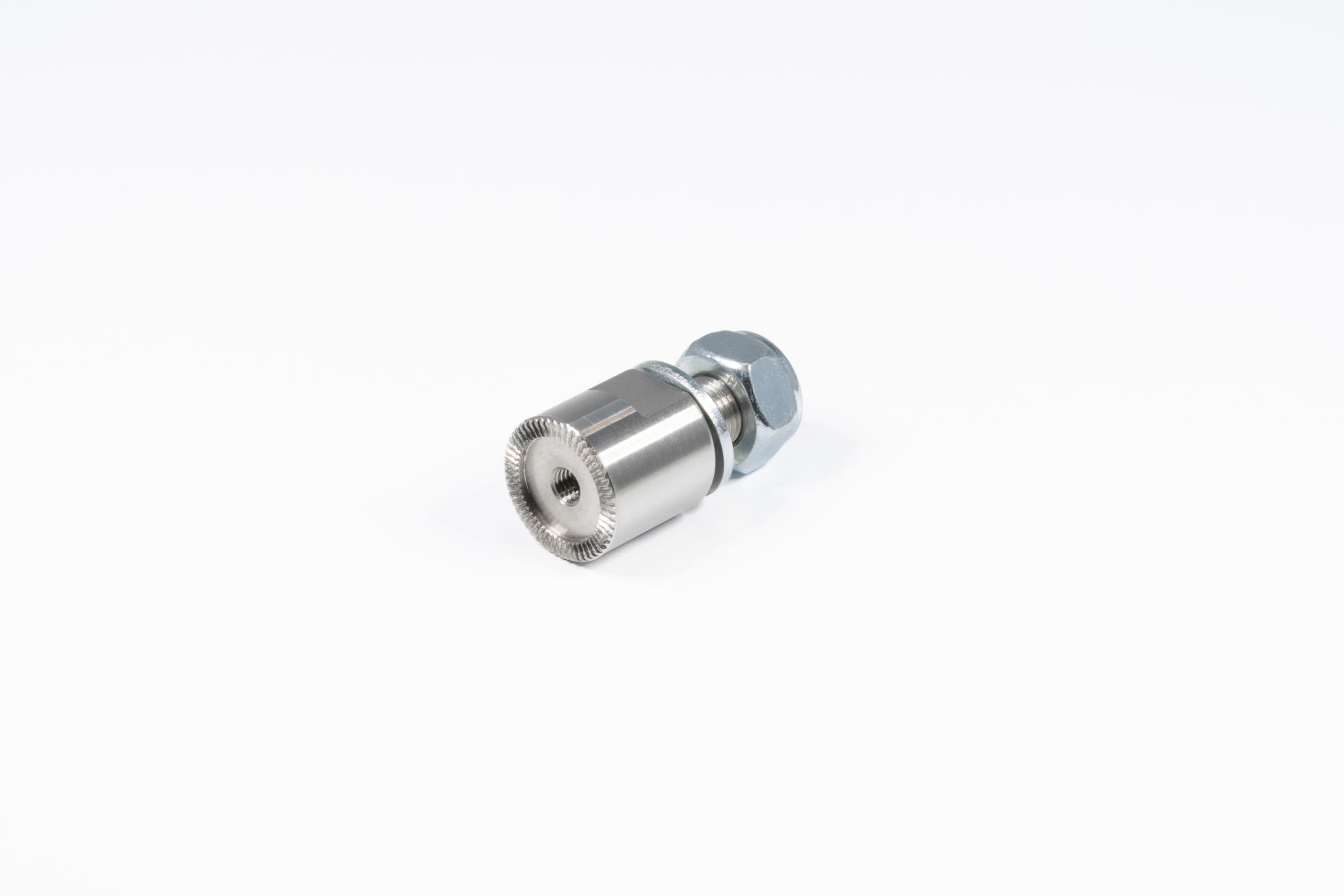
For a recessed frame, you need an adapter to extend quick-release axles (e.g., here) and a thru-axle adapter for thru-axles (e.g., here) to compensate for the recess, see illustration.
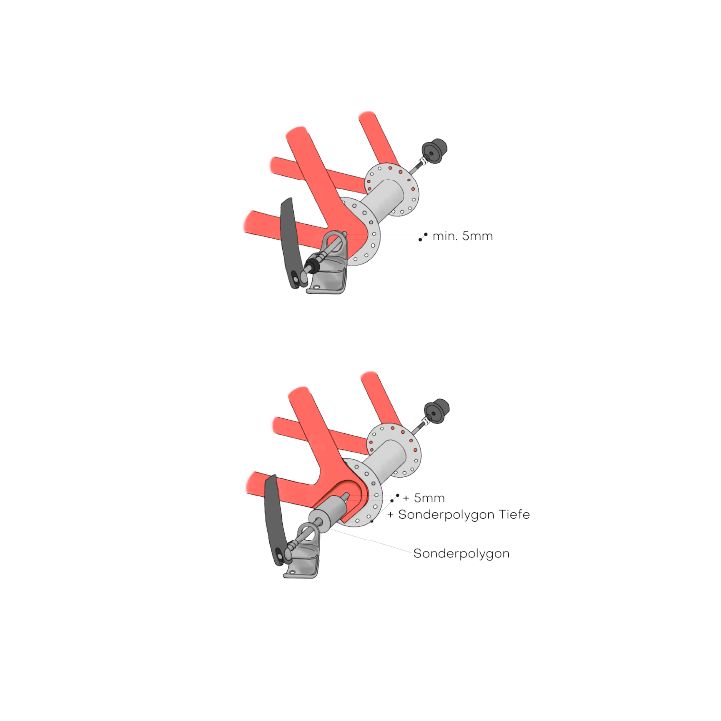
For all quick-release axles, you can learn more about the special polygon in step 3.2.
3. Check Axles
Now we will check whether you can continue to use your axle without any problems or if an adjustment is needed.
Check full axles
If you have a full axle, check now whether you can use it without problems, need accessories, or have to replace it.
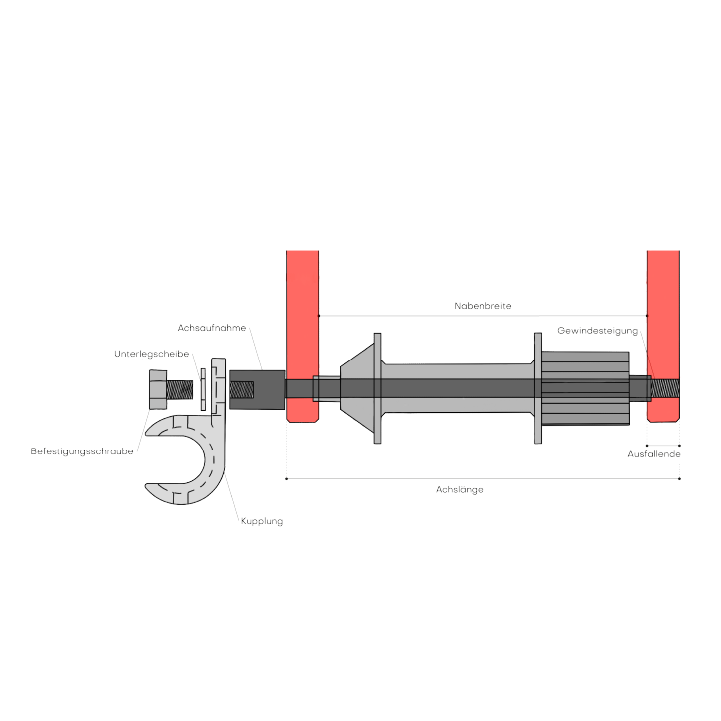
Loosen the castle nuts and measure whether there is at least 15 mm of remaining thread on the full axle.
If you have a quick-release axle instead, check its compatibility as follows:
Frame with flat dropout: Loosen the quick-release lever and check if the axle protrudes at least 10mm (nut + coupling piece) on the other side for attaching the coupling (Note: If less than 10 mm remains on the other side of the axle, your axle is too short and you will need an adapter.
Frame with recessed dropout: You need to compensate for the recess with an adapter so that the coupling can be attached.
Check the drive axle
If you have a thru-axle instead, proceed as follows:
Compare the illustration with your thru-axle to determine the axle length, axle mount, and thread pitch, and to find the appropriate thru-axle.
4. Assembly & Order
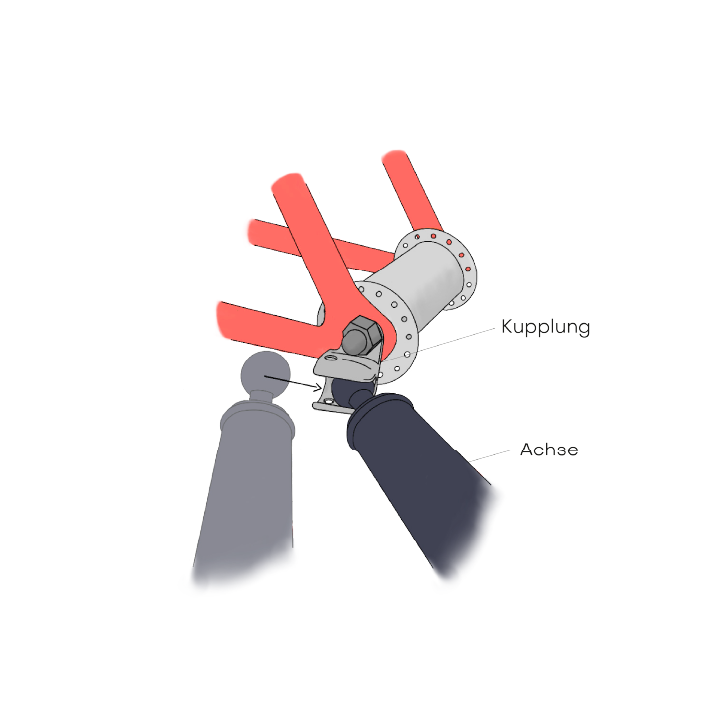
Attach and align the clutch.
Full Axle Assembly
Pay attention to the order of the individual parts.
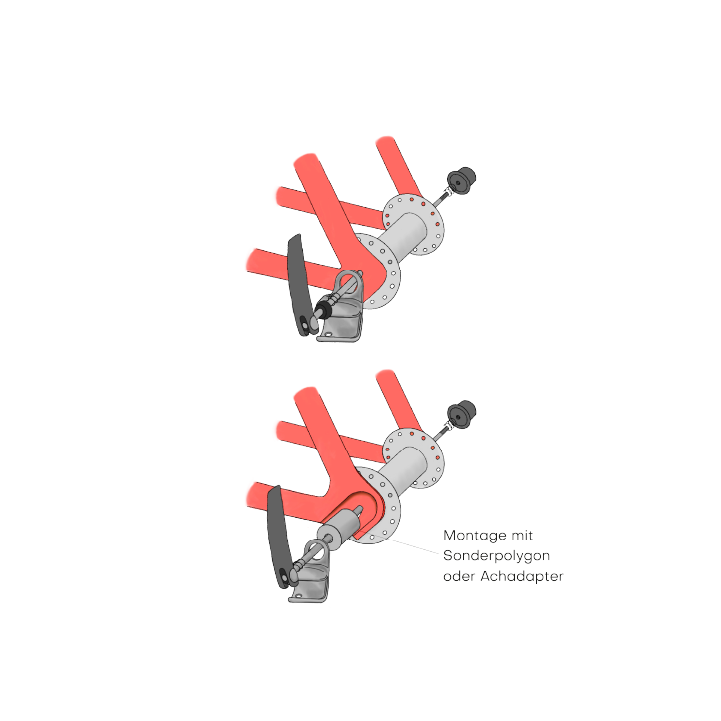
Quick Release Axle Installation
Pay attention to the order of the individual parts.
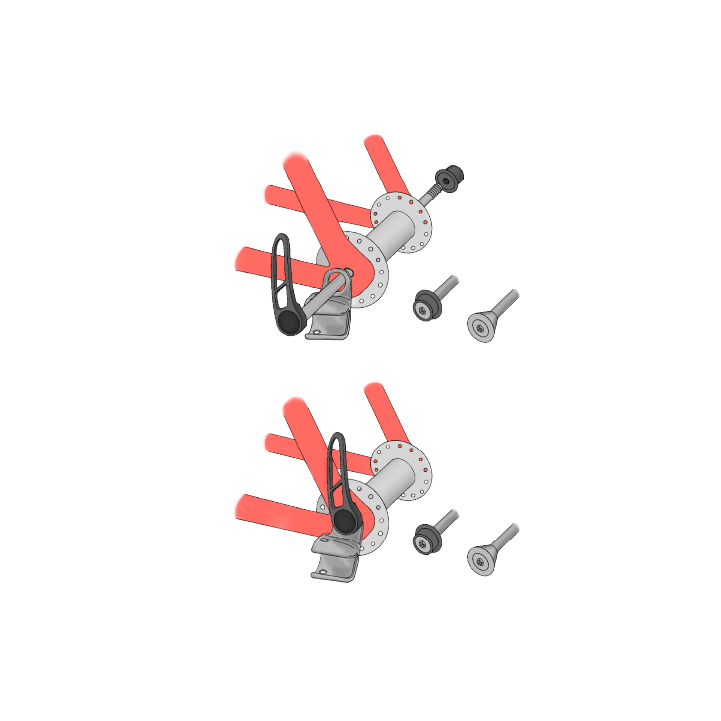
Steering Axle Assembly
Pay attention to the order of the individual parts.
4. Hook and secure the drawbar
The clutch must be securely seated and aligned as shown in the illustrations. Now you can get started.
Hanging
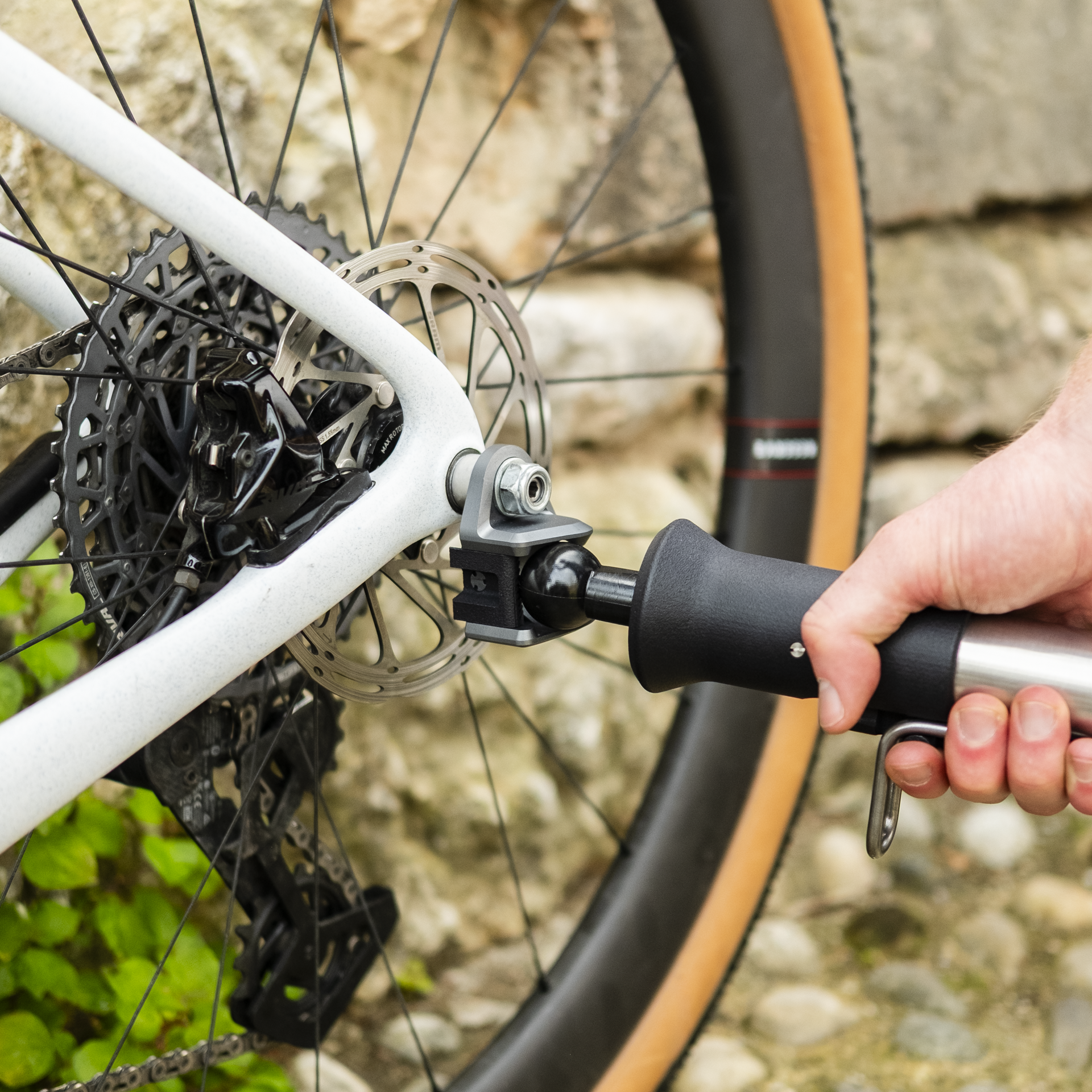
Insert the ball head of the bicycle trailer drawbar into the coupling on the bicycle. The illustration shows the Thule model. With the veolo coupling, the ball head clicks in from the side.
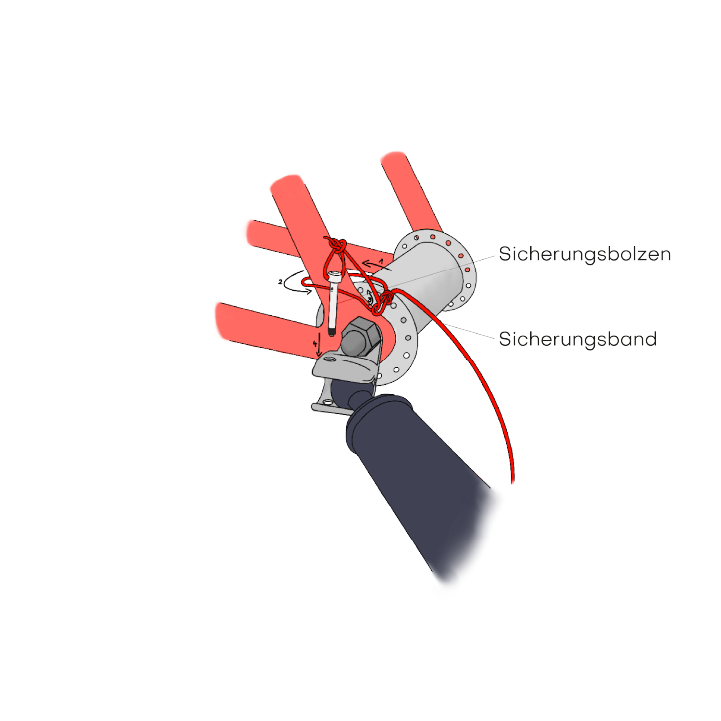
Save
Secure the coupling with the safety cable around the frame. Pass the safety cable once around the frame and back through the loop in the safety cable. Now insert the locking pin into the coupling until it clicks into place. The illustration shows the Thule model.
For the veolo coupling, the safety cable must be attached to the frame. A locking pin is not necessary. Optionally, you can lock the coupling.
Suitable accessories for your clutch
Axle Adapter Full Axle
If your solid axle has less than 15 mm of remaining thread.
Does the Veolo coupling fit the thru-axle of gravel bikes?
To install on the gravel bike, you need a suitable new thru-axle with a lateral mount for various coupling systems. We always include the appropriate Thule coupling piece.
Is the appropriate bicycle-side coupling included in the delivery?
Yes, the appropriate coupling piece from Thule is included as standard. In the configuration, you can alternatively choose the Weber coupling for a small additional charge.
What distinguishes the standard clutch from the Weber clutch?
Standard coupling (similar to Thule): proven system with ball head on the drawbar and counterpart on the bicycle, secured with a split pin and safety cable. Almost play-free, durable, unobtrusive – installed as standard and supplied with the counterpart.
Weber coupling: technically more complex, with drawbar connection and integrated lock. A slightly larger coupling piece remains on the bike; the mounting part for the bicycle is not included and cannot be combined with the swivel drawbar.